
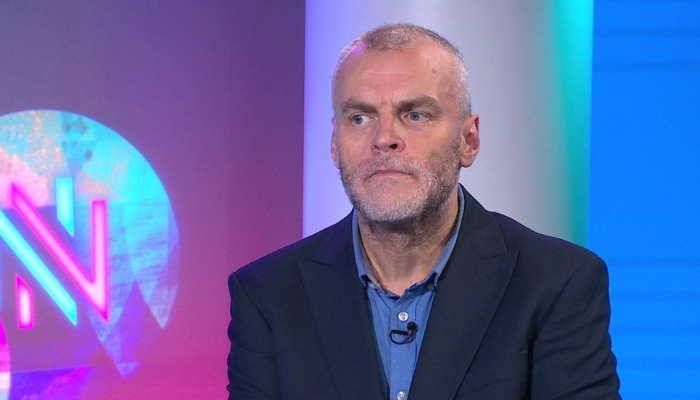
Questions about Tim Montgomerie health problems have appeared online for years, with some searches focusing on possible physical illnesses and others asking about his mental wellbeing. Because Montgomerie is a prominent British political commentator who has spent much of his career in the public eye, curiosity about his personal life is understandable. However, health claims require a higher standard of evidence than ordinary celebrity speculation.
The most important distinction is between what Montgomerie has personally discussed and what has merely circulated online. Publicly available information supports the fact that he experienced significant mental health difficulties during the COVID-19 lockdown period. He spoke about isolation, depression, counselling, and treatment in a public interview. By contrast, claims linking him to conditions such as Parkinson’s disease, cerebral palsy, or a stroke have not been reliably confirmed.
This article examines what is actually known about Tim Montgomerie’s health, why speculation developed, and how readers can distinguish a genuine public disclosure from an unsupported medical claim.
What Is Known About Tim Montgomerie’s Health?
The clearest publicly documented health issue associated with Tim Montgomerie concerns his mental health during the COVID-19 lockdown. In a June 2022 interview connected with the New Culture Forum, he discussed a particularly difficult period in his life and described how living alone and experiencing prolonged isolation affected him emotionally.
Montgomerie’s account is important because it comes from his own public discussion rather than from someone trying to interpret his appearance. He acknowledged experiencing depression and reaching a very difficult emotional state during lockdown. He also discussed seeking professional counselling and receiving medication as part of his efforts to deal with the situation.
That disclosure provides a reasonable basis for saying that Montgomerie experienced mental health difficulties. It does not, however, provide evidence for every other condition that has been attached to his name online. A single confirmed health disclosure should not be expanded into a list of diagnoses that the person has never publicly confirmed.
How the COVID-19 Lockdown Affected His Mental Wellbeing
The COVID-19 pandemic created an unusual environment in which normal routines disappeared almost overnight. For someone living alone, the restrictions could be particularly difficult because ordinary social contact, professional interaction, travel, and everyday activities were dramatically reduced.
Montgomerie has spoken about the emotional consequences of this period in personal terms. His public comments indicate that isolation played an important role in his struggles and that the experience became much more serious than ordinary temporary stress. He sought counselling and medical support rather than simply trying to ignore the problem.
His experience also illustrates why mental health problems should not automatically be judged by someone’s professional success. A person can have a successful career, appear confident in public, and still experience depression, loneliness, or emotional exhaustion privately.
For readers searching for Tim Montgomerie health problems, this is arguably the most useful part of the public record. His own account gives a concrete example of how prolonged isolation can affect wellbeing and why seeking professional assistance can be an important part of recovery.
Did Tim Montgomerie Have a Serious Physical Illness?
There is currently no reliable public confirmation that Tim Montgomerie has been diagnosed with a serious physical illness such as cancer, Parkinson’s disease, or another major neurological condition. Several websites discussing his health make the same distinction: physical-health claims circulating online are not supported by a confirmed statement from Montgomerie or a credible medical source.
This does not mean that nobody has ever made such claims. Quite the opposite: online discussions have connected his name with several possible conditions. But repetition does not turn an allegation into a medical fact. Without a reliable source, it is inappropriate to describe a suspected condition as though it were an established diagnosis.
It is also important to remember that a public figure’s decision not to discuss a medical condition does not prove that no condition exists. Health information is private. The responsible conclusion is therefore narrower: there is no verified public evidence establishing the serious physical illnesses that are sometimes mentioned in searches about Montgomerie.
Where Did the Rumors About His Health Come From?
Health rumors about public figures often begin with small observations. A viewer may notice a change in someone’s speech, movement, energy, appearance, or presentation and wonder whether there is a medical explanation. The speculation can then move from a private question to a social-media post and eventually to websites repeating the claim.
That appears to be part of the wider pattern surrounding Tim Montgomerie health problems. Online sources have discussed possibilities such as cerebral palsy, Parkinson’s disease, and stroke, but the available evidence does not establish those diagnoses.
The problem with this kind of speculation is that ordinary observations cannot reliably diagnose medical conditions. A change in someone’s voice, posture, facial expression, or movement can have countless explanations, including tiredness, stress, age, environment, temporary circumstances, or simply natural variation.
Medical diagnoses require appropriate clinical assessment. Searching through videos or photographs cannot replace that process. For that reason, readers should be particularly cautious when an article confidently names a disease but provides no statement from the individual, physician, medical record, or reputable reporting.
What Is Known About His Recovery and Wellbeing?
Montgomerie’s public discussion of his mental health also included information about getting help. He described counselling and the use of antidepressant medication during the difficult period, and later discussed moving forward from that experience.
The significance of this is not simply that medication was involved. His experience demonstrates that mental health treatment can involve different forms of support depending on the individual and the circumstances. Professional counselling, medical guidance, social support, and changes in routine can all play roles in someone’s recovery.
At the same time, it would be inappropriate to make assumptions about his present medical condition based only on old interviews. A person’s health can change, and someone who previously discussed depression may later experience very different circumstances. Unless a person provides a current update, readers should avoid making definitive claims about their present health.
The most accurate approach is therefore to recognize what Montgomerie has disclosed while respecting the boundaries of information he has chosen not to make public.
Why It Is Important to Separate Facts From Health Rumors
Health misinformation can be more damaging than ordinary celebrity gossip because medical labels carry real consequences. Associating someone with a neurological disease, disability, or other serious condition without evidence can create a false impression about that person’s life and can also contribute to misunderstanding of the condition itself.
The discussion surrounding Tim Montgomerie health problems is a useful example of why source quality matters. Several online pages repeat similar claims, but some of those claims ultimately trace back to speculation rather than an original medical disclosure. A large number of websites saying the same thing does not necessarily mean the information has been independently verified.
A better approach is to look for first-person statements, reputable interviews, established news reporting, or other sources that can clearly establish where a health claim originated. If a diagnosis appears only in anonymous posts, discussion forums, or articles that cite one another, it should remain classified as unverified.
This standard protects both public figures and readers. It also makes health-related information more useful because it focuses attention on what can actually be established rather than what might simply be interesting to speculate about.
What Should Readers Take Away About Tim Montgomerie Health Problems?
The public record gives a relatively straightforward answer. Tim Montgomerie has openly discussed experiencing serious mental health difficulties during the COVID-19 lockdown, including the effects of isolation and depression. He sought professional support and discussed his treatment publicly.
Beyond that, caution is necessary. Claims that he has Parkinson’s disease, cerebral palsy, suffered a stroke, or has another major physical illness have not been reliably confirmed in the public sources reviewed for this article. They should therefore not be presented as established facts.
This distinction is especially important when writing about a living person’s health. Curiosity is understandable, but accuracy and privacy matter more than producing a dramatic answer. In Montgomerie’s case, the most defensible conclusion is that his documented health story involves a period of mental health difficulty that he chose to discuss publicly, while much of the additional physical-health speculation remains unsupported.
Conclusion
The discussion around Tim Montgomerie health problems is a good reminder that public curiosity and verified information are not always the same thing. Montgomerie has spoken openly about experiencing significant mental health struggles during the COVID-19 lockdown, including isolation and depression, and he has described seeking professional help during that period.
At the same time, there is no reliable public confirmation supporting many of the serious physical-health claims that appear online. Rumors about Parkinson’s disease, cerebral palsy, stroke, or other conditions should not be treated as diagnoses simply because they have been repeated.
For anyone researching Tim Montgomerie’s health, the clearest takeaway is simple: rely on what he has actually disclosed and on credible reporting, while treating unsupported medical speculation with caution.
FAQs
1. Does Tim Montgomerie have confirmed health problems?
The most clearly documented health issue is his experience with mental health difficulties during the COVID-19 lockdown. There is no reliable public confirmation of many of the serious physical illnesses sometimes associated with his name.
2. Did Tim Montgomerie suffer from depression?
Montgomerie has publicly discussed experiencing depression and significant emotional difficulties during the lockdown period. His comments indicate that isolation was an important factor in his experience.
3. Has Tim Montgomerie been diagnosed with Parkinson’s disease?
There is no reliable public confirmation that Tim Montgomerie has Parkinson’s disease. Online claims should not be treated as a confirmed diagnosis without credible supporting evidence.
4. Does Tim Montgomerie have cerebral palsy?
There is no verified public evidence confirming that Tim Montgomerie has cerebral palsy. The claim appears in online speculation, but it has not been established through a credible public statement or source.
5. Did Tim Montgomerie have a stroke?
No reliable public source reviewed for this article confirms that he suffered a stroke. Claims based on observations of his appearance or speech should not be treated as medical evidence.
6. Did Tim Montgomerie receive treatment for his mental health?
Yes. Public accounts state that he sought counselling and was prescribed antidepressant medication during his difficult period.
7. What is the most reliable information about Tim Montgomerie health problems?
The strongest information comes from Montgomerie’s own public discussion of his mental health struggles during lockdown. Other alleged diagnoses should be treated as unverified unless supported by a credible source or direct public confirmation.