
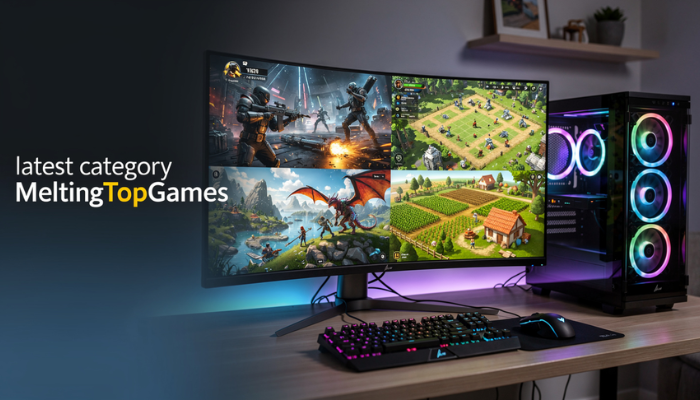
Digital entertainment continues to evolve at breakneck speed, reshaping how players interact with virtual worlds, narrative frameworks, and competitive arenas. Exploring the latest category meltingtopgames offers enthusiasts and casual players alike an exclusive window into groundbreaking industry trends, genre-bending hybrid titles, and state-of-the-art visual design. Whether you track indie game breakthroughs, high-budget blockbuster engines, or tabletop-inspired strategic digital adaptations, understanding modern gaming shifts has never been more exciting or essential.
The rise of hybrid gaming categories bridges the gap between traditional gaming formats and experimental sandbox environments. As game developers blend procedural generation, cross-platform multiplayer, and immersive worldbuilding, the latest category meltingtopgames landscape delivers fresh experiences tailored for every style of play. From complex tactical challenges to cozy, aesthetic simulators, modern releases are dismantling old creative barriers and setting higher standards for player engagement.
Defining the Core Dynamics of Meltingtopgames
The digital gaming ecosystem thrives on constant reinvention, and understanding modern catalog categorizations requires examining both design philosophy and player demand. In the realm of the latest category meltingtopgames, interactive architecture focuses heavily on high replayability, rich narrative player agency, and modular design systems. Modern titles no longer limit themselves to rigid, single-genre tropes; instead, they integrate survival systems into real-time strategy, infuse rhythm mechanics into first-person action, and combine deck-building tactical loops with rogue-lite role-playing frameworks. This structural flexibility allows developers to produce distinct, unpredictable gaming moments that continuously captivate modern audiences.
Beyond mechanics, these curated categories prioritize community-centric loops and accessible onboarding without sacrificing skill ceiling depth. Developers implement intelligent difficulty balancing and modular difficulty modifiers, allowing newcomers to experience rich storylines while granting seasoned veterans the rigorous challenge they crave. As cloud synchronization, responsive cross-play architecture, and flexible user interfaces become industry standards, players can transition between platforms without losing progress. This architectural evolution ensures that every entry under this gaming umbrella remains engaging, versatile, and structurally resilient across multi-device environments.
Next-Generation Visual Engines and Immersion Standards
Visual fidelity has leaped far beyond simple polygon density, transforming modern digital landscapes into living, breathing artistic showcases. Within the latest category meltingtopgames space, the deployment of advanced rendering pipelines, real-time ray tracing, and dynamic global illumination creates photorealistic lighting, lifelike shadows, and organic surface reflections. These technical advancements do not merely serve aesthetic vanity; they actively enhance environmental storytelling by turning terrain, atmospheric weather systems, and ambient lighting cues into functional gameplay elements that directly impact player navigation and tactical awareness.
Complementing graphical leaps, modern physics engines and spatial audio engineering elevate sensory immersion to unprecedented heights. Destruction mechanics now model material density authentically, allowing players to dismantle cover, redirect fluid flows, or trigger environmental chain reactions strategically. Concurrently, object-based spatial acoustics simulate exact room acoustics, material dampening, and directional sound paths. This sonic precision grants players tactical awareness purely through directional audio cues, cementing the sensory atmosphere required for unforgettable, emotionally resonant gaming experiences.
Strategic Gameplay Loops and Dynamic Mechanics
At the heart of every unforgettable release lies a finely tuned mechanical foundation that rewards creativity, rapid calculation, and strategic foresight. The latest category meltingtopgames titles distinguish themselves by moving away from static linear progression trees in favor of emergent, player-driven problem-solving loops. Whether organizing complex supply chains in resource simulators or calibrating precision loadouts in tactical squad arenas, players encounter dynamic friction systems that demand constant adaptation. By introducing random event triggers and emergent environmental hazards, developers maintain high stakes across every single run.
Progression mechanics have likewise transformed into highly customizable, branching ecosystems. Rather than locking players into static character archetypes, modern game designs encourage dynamic respeccing, modular gear crafting, and synergistic ability loadouts. This modularity fosters vibrant community discussion, meta-experimentation, and continuous tactical evolution. When an individual discovers an unintended synergy between two abilities, it sparks a ripple effect across the entire competitive and cooperative ecosystem, keeping the mechanical meta vibrant, diverse, and resistant to strategic stagnation.
Cross-Platform Ecosystems and Social Connectivity
The contemporary gamer no longer accepts artificial platform boundaries, making ubiquitous cross-play and cross-progression a fundamental expectation. Within the latest category meltingtopgames directory, developers prioritize network code reliability, minimal input latency, and unified friend-network architectures that bridge PC, console, and mobile setups. Frictionless matchmaking algorithms group players by skill parity rather than hardware origin, establishing a balanced, expansive player base where communities remain active and vibrant long after initial launch windows.
In addition to competitive parity, social spaces inside modern titles have evolved into digital third places where players gather, create, and collaborate outside of standard combat objectives. Integrated community content hubs, robust photo modes, and comprehensive custom level creators empower users to express themselves creatively. By democratizing modding tools and map editors, gaming studios transform players from passive consumers into active co-creators, fostering deeply invested digital communities that drive organic, long-term longevity across the entire category.
Market Trends, Indie Breakthroughs, and Future Horizons
While triple-A studios command massive budgets, independent developers continue to serve as the creative heartbeat driving genuine structural innovation. In the context of the latest category meltingtopgames landscape, mid-tier and indie creators frequently pioneer bold, avant-garde design choices that challenge established corporate formulas. By focusing on hyper-specific emotional themes, minimalist visual stylings, or radically distinct control schemes, smaller studios build fiercely loyal followings and frequently establish brand-new subgenres that larger industry titans eventually adopt.
Looking toward the horizon, the convergence of procedural generation, adaptive machine learning behaviors for non-player characters, and sustainable live-service roadmaps hints at a dynamic future. Tomorrow’s landmark releases will feature adaptive game worlds that learn from collective player tendencies, evolving dialogue trees dynamically and reshaping world topography based on server-wide community milestones. As digital distribution continues to refine its curation models, high-quality hidden gems across every genre will enjoy greater visibility, securing a thriving future for diverse gaming formats worldwide.
The modern gaming industry continues to demonstrate unbounded creative potential, blending visual artistry, technical sophistication, and intricate design philosophies into unforgettable interactive media. Keeping pace with the latest category meltingtopgames provides players with a front-row seat to this extraordinary cultural evolution. As developers continue pushing mechanical boundaries, refining social connectivity, and honoring player agency, the digital landscape remains more vibrant, engaging, and accessible than ever before.
Frequently Asked Questions
1. What does the term latest category meltingtopgames refer to?
It refers to the newest curated selection of trending video games, innovative genre hybrids, and digital gaming classifications highlighting top-tier visual performance, strategic mechanics, and compelling player experiences.
2. How do modern hybrid genres improve replayability?
Hybrid genres combine distinct mechanics—such as rogue-lite randomness, deck-building tactical loops, and survival elements—creating unpredictable gameplay situations that ensure every individual playthrough feels unique.
3. Are titles in this category compatible across multiple gaming platforms?
Yes, modern releases within this category frequently emphasize cross-platform multiplayer and cross-progression, allowing users to connect and play across PC, home consoles, and mobile ecosystems seamlessly.
4. What role do advanced visual engines play in modern releases?
Beyond delivering high-resolution visuals, modern graphic engines incorporate dynamic lighting, realistic physics simulations, and environmental interactions that serve as core functional components of gameplay.
5. How do indie games influence this trending category?
Indie developers experiment with unconventional mechanics and art directions without corporate constraints, frequently introducing innovative ideas that reshape broader gaming trends and inspire major studio productions.
6. Is an internet connection required to enjoy these games?
While multiplayer modes and cloud-saving features rely on internet connectivity, many titles feature rich single-player campaigns, offline skirmish modes, and local cooperative play options.
7. How do modern progression systems cater to both casual and competitive players?
Current releases employ modular difficulty settings, dynamic skill trees, and flexible respec mechanics, enabling casual players to enjoy the story while offering dedicated challenges for competitive enthusiasts.
8. Why is spatial audio critical in modern competitive titles?
Spatial audio simulates realistic acoustics, material reflections, and directional sound paths, allowing players to pinpoint enemy footsteps, environmental hazards, and reloading sounds with high spatial precision.
9. What should beginners look for when choosing a title in this category?
Beginners should evaluate intuitive user interfaces, clear tutorial systems, active community support, and adjustable difficulty curves to ensure a smooth, enjoyable learning experience.
10. How will future releases continue to innovate interactive entertainment?
Upcoming titles are poised to integrate smarter non-player character behaviors, dynamic server-wide world events, and deeper community modding integration to create living, player-driven digital worlds.